4 reasons to use a staffing agency to find a medical job
December 23, 2025
Finding the right healthcare job—one that matches your skills, goals, lifestyle, and values—can be a full-time job in itself. Browsing job boards, researching employers, arranging interviews, and juggling paperwork can feel overwhelming. That’s why more clinicians are turning to staffing agencies as strategic partners in their job search.
A good medical job placement company offers structure, clarity, and support, helping you navigate a complex process with more confidence and less stress.
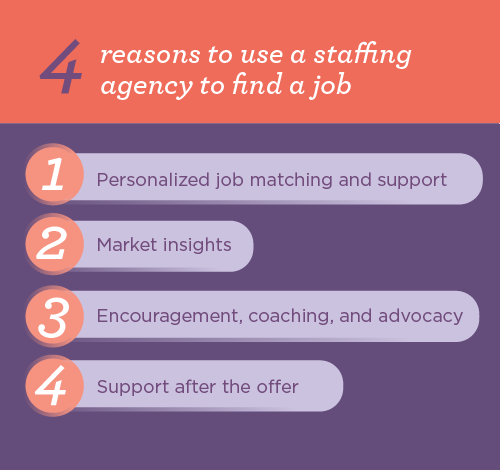
1. Personalized job matching and hands-on support
One of the biggest advantages of working with a staffing agency is the tailored job matching. Instead of sending you a long list of generic openings, a recruiter begins by getting to know your priorities—including your preferred practice setting, compensation expectations, lifestyle needs, and long-term goals. They filter opportunities with those factors in mind, presenting only the roles that genuinely align with what you’re looking for.
During her job search, CRNA Megan McAdams was set on working at just one hospital. Her recruiter understood which facilities typically required CRNAs to rotate among multiple sites—a common expectation in the field—and that insight helped her significantly narrow her options.

Relocating is a big enough challenge. I didn’t want to travel to multiple hospitals.
Recruiters also tap into extensive networks and longstanding employer relationships. This often gives you access to positions that aren’t publicly posted, as well as early insights into new openings. And once the right opportunities surface, the agency helps handle the details. They can contact employers on your behalf, set up interviews, and coordinate schedules. In many cases, they’ll even arrange travel for in-person interviews, from flights to hotel reservations, so you can focus on preparing rather than booking logistics.
Megan enjoyed having someone do the heavy lifting for her.
My recruiter sent me 12 potential hospitals with the schedule, a one-paragraph summary of each hospital, vacation, salary, and bonuses.
“He then kept in contact with those hospitals and set up interviews," she says. "There’s no way I could have done that simply. It was exactly what I was looking for.”
2. Market insight and realistic expectations
Whether you’re entering the workforce, relocating, or shifting practice settings, it’s not always clear what to expect in terms of pay, call schedules, workload, or hiring timelines. Recruiters are immersed in this information daily, giving them a real-time view of the healthcare job market. They can help you understand what’s typical in your specialty, what differs by region, and where demand is strongest.
“I was coming from a position where I didn’t really know what I wanted or what the opportunities were out there, so working with a medical staffing agency was great in terms of figuring all that out. I really appreciated understanding and learning what I didn’t already know,” says hospitalist Dr. Mike Gross.

If you are trying to figure out what your options are and you want to have the support of somebody who knows the market a lot better, I would recommend a medical job agency, without question.
Market insight and expertise can help you set realistic expectations early and avoid the frustration of pursuing roles that may not align with your goals. It also guides you toward opportunities that might fit your priorities better than you initially realized. If you’re unsure whether a job is the right match, your recruiter can help you evaluate it through the lens of your long-term career trajectory.
You don't have to go it alone: Why you should use CompHealth to find a healthcare job
3. Encouragement, coaching, and advocacy
Good recruiters do more than manage logistics—they’re also a steady source of support. The job search process can be an emotional one, especially when you’re balancing interviews with clinical work, considering relocation, or weighing multiple offers. Having someone in your corner provides reassurance during a time filled with uncertainty.
“Every single time I had an interview in a different place, my recruiter would make a list of the pros and the cons,” says nurse practitioner Elena Burpee. “She would check in with me right after the interview. She would say, ‘Good luck. You’ll do great,’ before the interview.
I felt like I had somebody on my side, like a friend, somebody that was all in it with me. It was definitely a unique experience and one I didn’t think I would ever have with a recruiting business.
Recruiters help you prepare for interviews, refine how you present your experience, and think through what to ask potential employers. They check in before and after conversations, helping you process what went well and where to focus next. Many providers describe their recruiter as a cheerleader, mentor, or coach—someone who believes in their potential and keeps them moving forward.
4. Support after the offer
Once you receive an offer, things don’t get simpler—contracts, credentialing, and licensing can quickly become complicated. Staffing agencies can help manage these steps as well, providing clarity and reducing the administrative burden.

Contract guidance and negotiation
Recruiters help you understand compensation structures, bonuses, benefits, and non-competes—and can negotiate on your behalf.

Credentialing and licensing assistance
Agencies help complete forms, track deadlines, communicate with boards, and ensure nothing stalls your start date.

Logistical support after acceptance
Some agencies coordinate relocation support, reimbursements, or travel arrangements for onboarding.
This comprehensive support continues until you’re settled into your new role and beyond.
Making the most of the partnership
Your experience with a staffing agency is strongest when the relationship is a partnership. Be transparent about what matters most to you and what you want to avoid. The more honest you are about your must-haves and deal-breakers, the more effectively your recruiter can advocate for you. Staying responsive also makes a difference. Healthcare hiring moves quickly, and timely communication ensures you don’t miss out on strong opportunities.
Working with a staffing agency for medical jobs isn’t about giving up control, it’s about gaining a guide. From personalized job matching and interview coordination to market insight, emotional support, and post-offer assistance, a staffing agency can simplify an otherwise overwhelming process.
For many healthcare professionals, the result is not only a better job outcome, but a better job search experience: clearer, more organized, and far less stressful.
Frequently Asked Questions
Q: Is it worth using a staffing agency to find a job?
A: Yes. A staffing agency can make your job search faster, easier, and more informed. Recruiters help you access opportunities you may not find on your own, provide insight into the job market, coordinate interviews, and streamline the entire process. Many healthcare providers find that working with a recruiter saves time, reduces stress, and leads to better-matched opportunities.
Q: Do staffing agencies charge a fee for their services?
A: No. Reputable healthcare staffing agencies do not charge job seekers for their services. Their fees are paid by the employer once a provider is successfully placed. That means you receive dedicated job-search support, market expertise, interview coordination, and post-offer assistance at no cost.
Q: Can I still look for jobs on my own?
A: Absolutely. Working with a staffing agency doesn’t limit your ability to search independently. Many clinicians continue reviewing job boards or applying directly to positions while also partnering with a recruiter. The key is to communicate openly so you and your recruiter aren’t duplicating efforts.
Q: What support do I get from a recruiter?
A: Recruiters offer a wide range of hands-on support throughout the job search, including:
Identifying openings that match your clinical experience, preferences, and lifestyle
Contacting potential employers and arranging interviews
Providing market insight and helping set realistic expectations around pay, location, and workload
Coaching you before interviews and providing feedback afterward
Acting as your advocate with employers and helping you evaluate your options
Q: What happens after I accept a job offer?
A: Support continues even after you sign. Physician employment agencies typically assist with contract review and negotiation, helping you understand compensation, call structure, bonuses, and other terms. They also guide you through credentialing and licensing, coordinate with facility teams, help gather documents, and track deadlines to prevent delays. If relocation or travel is required, many agencies also help with logistics.
CompHealth can help you find the perfect healthcare job. Give us a call at 800.453.3030 or view today’s healthcare job openings to get started.